Students must show more money
One student applying outside Québec now shows CAN$23,448 for living costs, up from CAN$22,895. Tuition and travel are on top of that.

The study permit, the money you must show and 1,100+ public and private schools, checked against the Government of Canada’s own pages. Plan your funds and compare schools.

What's new
Canada changed several rules in 2026. If someone gives you advice that doesn't match this list, ask them why.
See our sourcesOne student applying outside Québec now shows CAN$23,448 for living costs, up from CAN$22,895. Tuition and travel are on top of that.
Degree-granting graduate programs at a public designated school no longer need a provincial attestation letter.
Study in Canada
A study permit lets you study at a designated learning institution. Fees below are paid to the Government of Canada. Our service fees, if any, are separate.
CAN$150
Study permit fee
CAN$85
Biometrics, one person
Processing time varies by country. Check IRCC's current figure for Pakistan.
A study permit only works at a designated learning institution (DLI). Provincial governments don't necessarily regulate private schools, so confirm every private school is on the list. Use our school finder, and IRCC suggests starting about a year ahead for post-secondary study.
Each school sets its own entry rules, including the English or French level it needs. If a school asks for attested transcripts, check whether it wants HEC or IBCC attestation.
Most students need a provincial or territorial attestation letter, and it must go in with your application. Québec students usually need a CAQ instead. Master's and doctoral students at a public DLI, and primary and secondary students, are exempt.
You need money for tuition, living costs and return travel. Work out your total. Accepted proof includes bank statements for the past 6 months, a GIC or Canadian account, a student loan, a scholarship letter, and a sponsor's letter.
Send your acceptance letter, PAL or TAL, passport, two passport-size photos and proof of funds. IRCC recommends a letter of explanation. A medical exam and police certificate are needed only if IRCC asks.
Pakistan has visa application centres in Islamabad, Karachi and Lahore, run through VFS Global, and appointments are free to book. Temporary residence applicants give biometrics only once every 10 years.
The letter you get on approval isn't your permit. Show it at the border with your passport, acceptance letter and proof of funds, and the officer issues your study permit there. You can't work until your studies begin.
Tick as you go. This is saved only in your browser.
Visas
Open any entry for who it's for, what you need and the official page. "Open", "Paused" and "Closed" appear only where IRCC uses those words. Fees are federal fees per person.
Lets you study at a designated learning institution (DLI). It isn't a visa: if you're approved, you automatically receive the visitor visa or eTA you need to travel.
Since 1 January 2026, degree-granting master's and doctoral programs at a public DLI are exempt from the PAL or TAL. IRCC's school list has a separate tab for these programs, and the filter in our school finder uses it.
All primary and secondary schools in Canada are DLIs. Primary usually means grades 1 to 8 and secondary grades 9 to 12. These students don't need a PAL or TAL. Proof of care for a minor may be required, and some minors don't need a permit at all, so check before you apply.
You don't need a study permit if the program lasts 6 months or less, isn't part of a longer program, and you finish it within your approved stay, usually 6 months after you enter Canada.
Students going to Québec need a Certificat d'acceptation du Québec (CAQ) instead of a PAL, with rare exceptions. The money you must show is set by Québec's own ministry, not by IRCC's table.
A permit usually lasts the length of your program plus 90 days. Apply to extend at least 30 days before it expires. An extension costs CAN$150. Restoring expired student status costs CAN$396.25 in total.
Colleges and universities
Canada has no federal education department: each province runs its own system. A school must be a designated learning institution to host you, and being on the list doesn't mean every program qualifies for a work permit afterwards.
| Public universities | Public colleges and polytechnics | Private schools | |
|---|---|---|---|
| PAL or TAL | Most need one. Listed master's and doctoral programs don't | Most need one. Listed graduate programs don't | Needed in most cases, including at graduate level |
| PGWP language | CLB 7 | CLB 5, or CLB 7 for a bachelor's degree or higher | Depends on the program and whether it's eligible |
| PGWP eligibility | Listed by IRCC, but check your program | Listed by IRCC, but non-degree programs need an eligible field. Partner campuses may not qualify | Often limited to named programs. Many have none |
| Oversight | Provincial public system | Provincial public system | "Provincial governments do not necessarily regulate private schools" |
Tuition varies by school and program. Ask us, or check with the school.
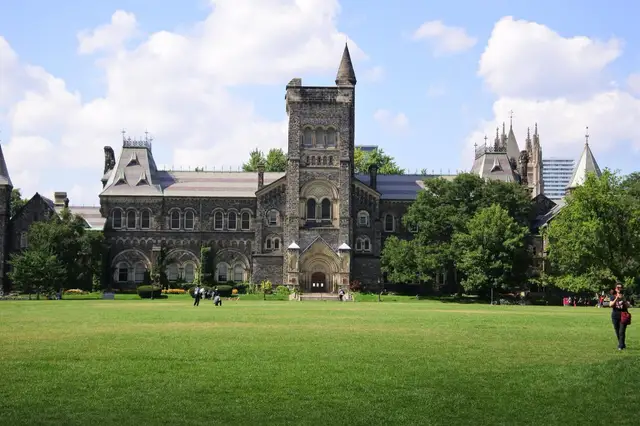
Toronto, Ontario
DLI number O19332746152. Fees: ask us
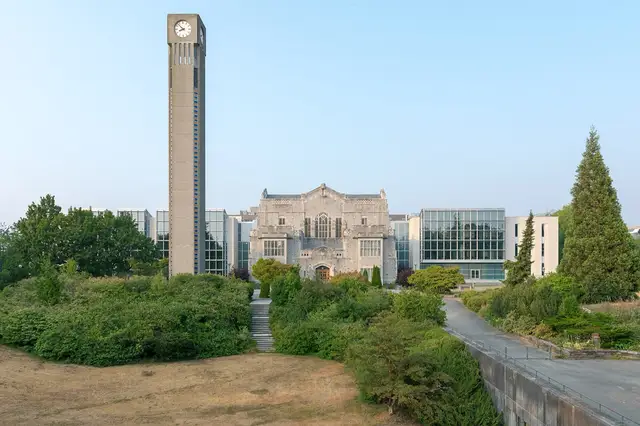
Vancouver, British Columbia
DLI number O19330231062. Fees: ask us

Montréal, Québec
DLI number O19359011033. Fees: ask us

Calgary, Alberta
DLI number O18761749692. Fees: ask us
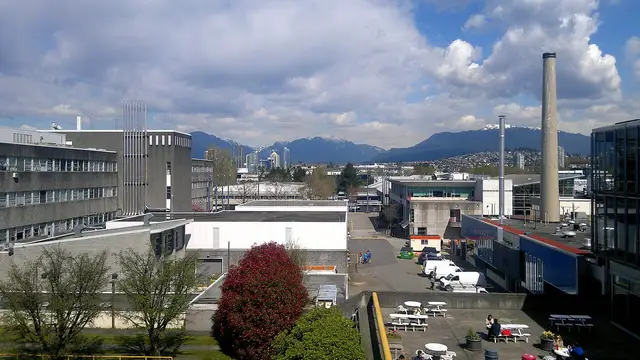
Burnaby, British Columbia
DLI number O19330128542. Fees: ask us
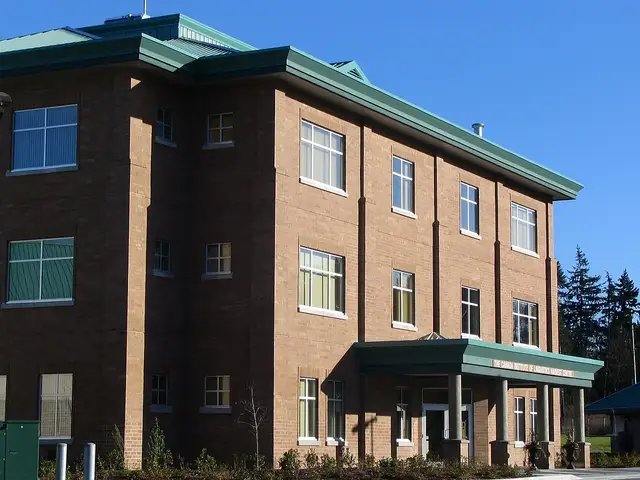
Langley, British Columbia
DLI number O19347055392. Fees: ask us
Waterloo, Ontario
Hamilton, Ontario
Edmonton, Alberta
London, Ontario
Kingston, Ontario
Toronto, Ontario
Toronto, Ontario
Ottawa, Ontario
Calgary, Alberta
Montréal, Québec
Halifax, Nova Scotia
Burnaby, British Columbia
Toronto, Ontario
Toronto, Ontario
Toronto, Ontario
Toronto, Ontario
Kitchener, Ontario
Oakville, Ontario
Ottawa, Ontario
Vancouver, British Columbia
New Westminster, British Columbia
Edmonton, Alberta
Winnipeg, Manitoba
Halifax, Nova Scotia
Vancouver, British Columbia
Vancouver, British Columbia
Niagara Falls, Ontario
Vaughan, Ontario
Vancouver, British Columbia
Vancouver, British Columbia
Vancouver, British Columbia
Vancouver, British Columbia
Burnaby, British Columbia
Ancaster, Ontario
Calgary, Alberta
Toronto, Ontario
IRCC's list. Primary and secondary schools aren't on it.
Loading the list…
Source: IRCC's designated learning institutions list. School names are shown as IRCC prints them, and university, college or other is our own grouping based on the name. Always confirm a program with the school and IRCC before you pay.
Costs and funds
IRCC's figure is the minimum you must show for living costs, not a real budget. Tuition varies by school and program, so enter the amount on your offer letter.
Total to showCAN$23,448
IRCC's table for applications on or after 1 September 2026, which excludes tuition and travel.
From IRCC's fee list. In Canadian dollars, per person.
| Study permit, or extension | $150 |
|---|---|
| Biometrics, one person / family | $85 / $170 |
| Restore student status | $396.25 |
We list only what we can check. Amounts and deadlines change, so ask us for what's open now.
Life in Canada
Practical facts from the Government of Canada's guides for newcomers. Many rules vary by province, so check locally once you've chosen a city.
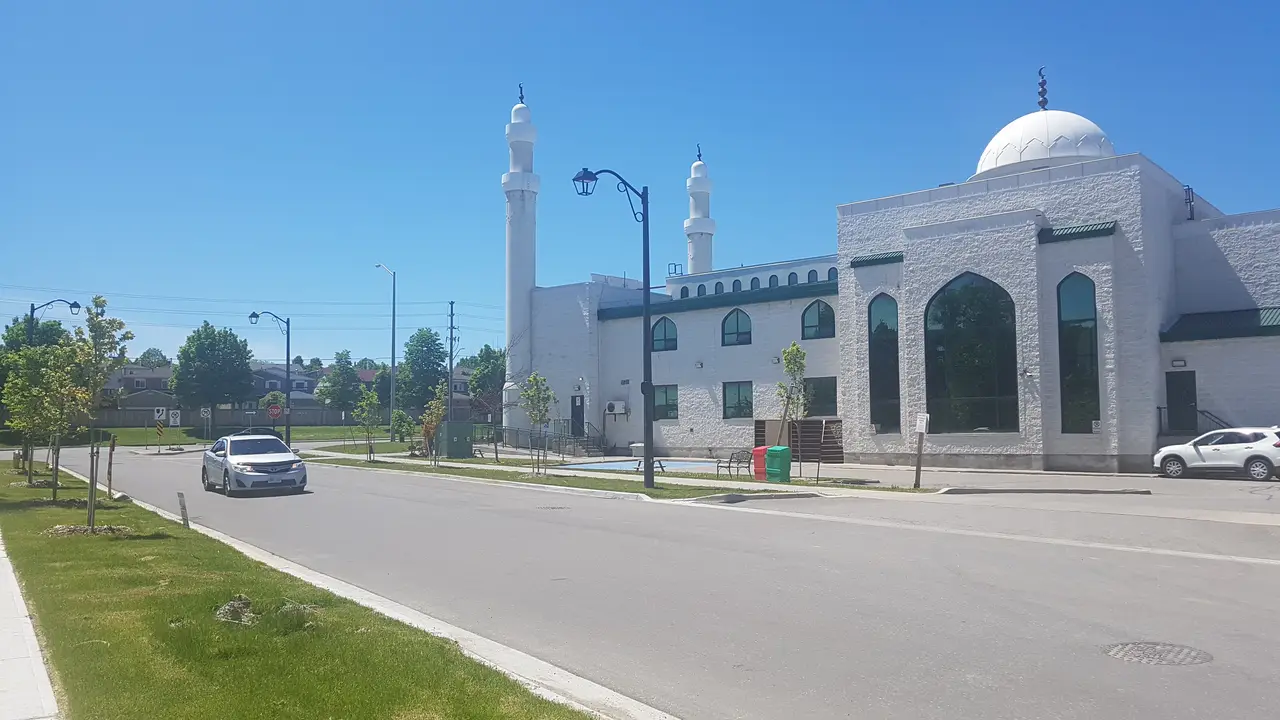
Local time updates live. Tap a city to see its schools on IRCC's list.

Ontario
One of the three cities where most newcomers to Canada settle.

British Columbia
One of the three cities where most newcomers settle, on the Pacific coast.
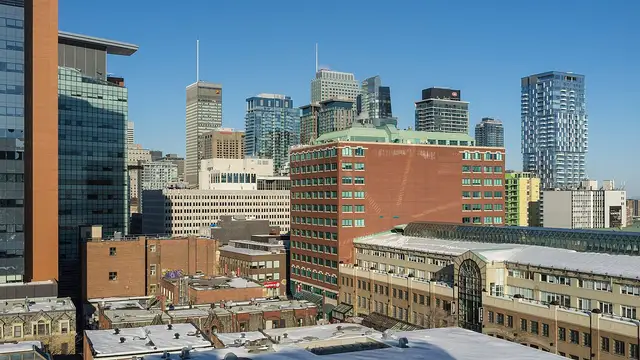
Québec
One of the three cities where most newcomers settle. Québec has its own study and immigration rules.
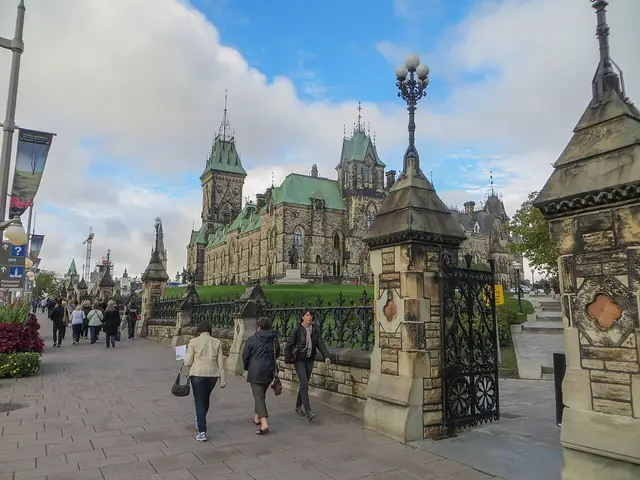
Ontario
Canada's capital, on the Ottawa River.
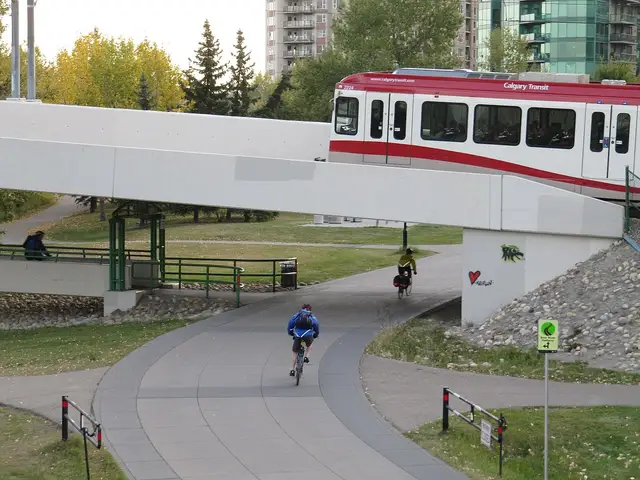
Alberta
On the Bow River in southern Alberta, with a light rail network.

Nova Scotia
On the Atlantic coast, in the region covered by the Atlantic Immigration Program.
Life between lectures
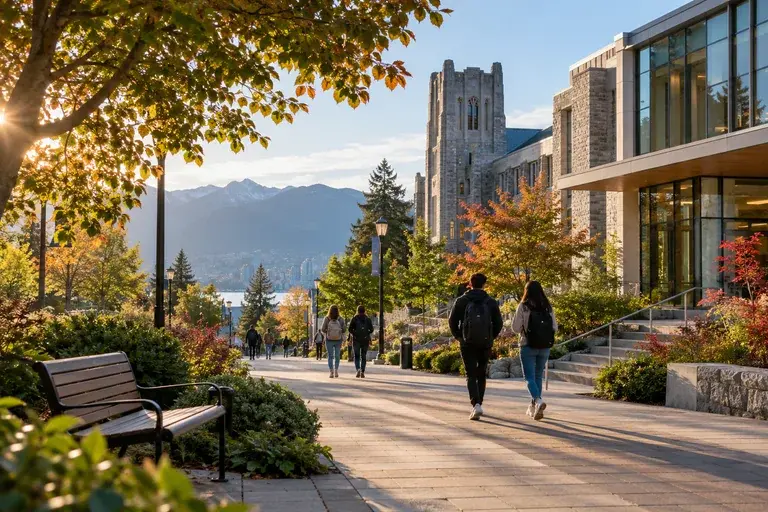
A campus to explore. A city to get to know. A community to become part of.


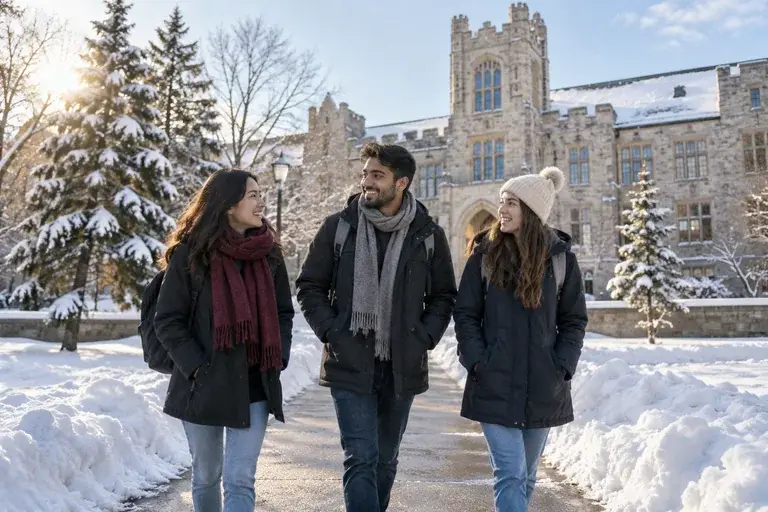

Page imagery is AI-generated for illustration. People and campus scenes are not verified client or institution photographs.
Find your place
Start with your subject, lifestyle and budget. Then compare the specific program and campus.
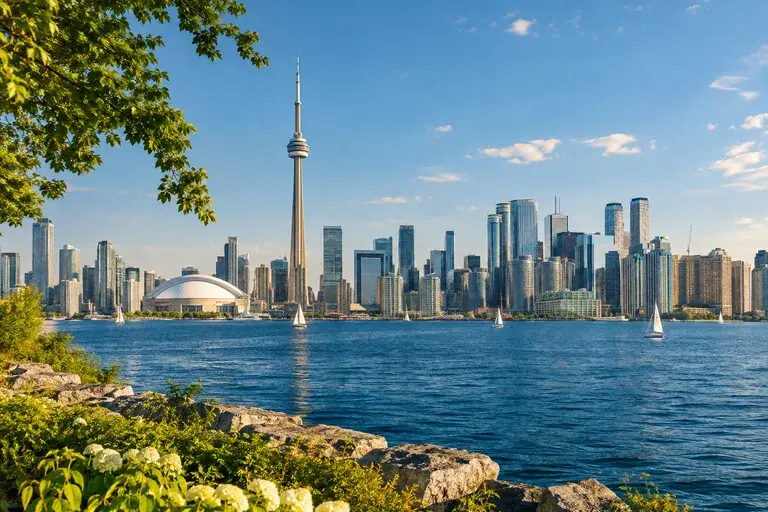
Ontario
Business · Technology · Finance · Media
Compare a major-city campus with options across the Greater Toronto Area. Include housing and commuting in your shortlist.
Planning lens: industry access + housing budget
Discuss Toronto & the GTA with us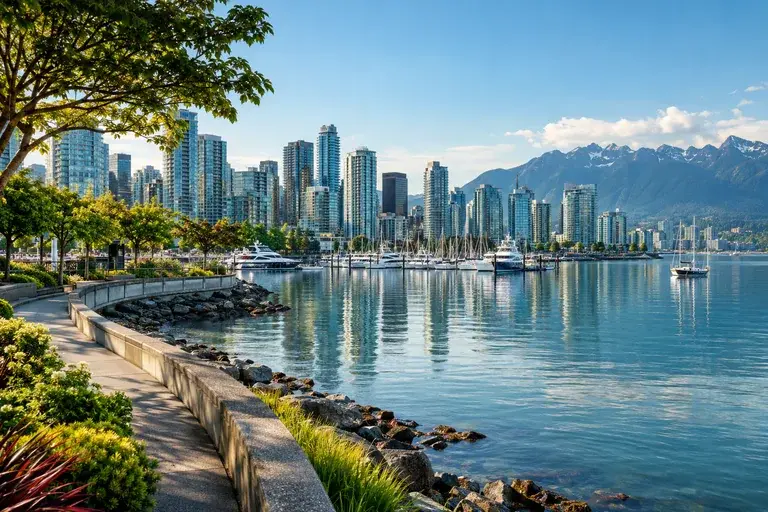
British Columbia
Technology · Film & VFX · Environment · Hospitality
Explore urban campuses and nearby communities. Compare the actual program, placement structure and local rental market.
Planning lens: campus location + living costs
Discuss Vancouver & Lower Mainland with us
Alberta
Energy · Engineering · Logistics · Data
Consider applied learning and university routes in two distinct cities. Review current provincial options separately from admission.
Planning lens: career fit + program outcomes
Discuss Calgary & Edmonton with us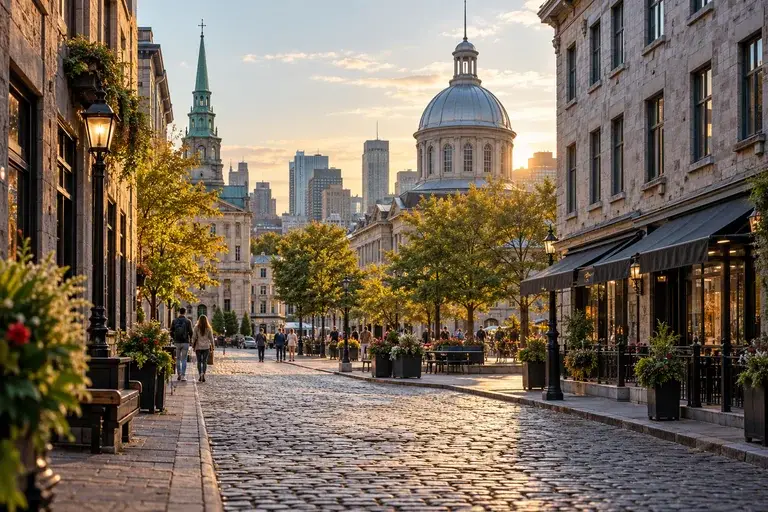
Québec
Artificial intelligence · Games · Aerospace · Arts
Explore French- and English-language study options. Check teaching language, CAQ requirements and Québec-specific finances.
Planning lens: language + provincial requirements
Discuss Montréal with usGallery
Stay safe
IRCC says plainly: "No one can guarantee you a job or a visa to Canada or permanent residence." That includes us.

Personal. Organized. Clear.
From your first shortlist to the questions that follow an offer.
How we help
A shortlist shaped around academic fit, program content, cost and your longer-term goals.
Organize a truthful study plan and supporting evidence. Regulated refusal advice requires an authorized professional.
Check consistency across genuine savings records, funding letters, tuition receipts and any GIC documentation.
Plan SIN guidance, banking, housing research and arrival arrangements. Confirm the agreed service scope first.
Confirm the adviser, credentials and scope before engaging immigration services. Airport pickup and accommodation coordination are subject to local availability and agreement.
Book a consultationBehind every application
These examples show the kind of planning a student may need. Every application needs an individual review.

Illustrative scenario · not a client result

Illustrative scenario · not a client result
Voices from campus
A preview of future student-life features. Video interviews will appear here once available.
A student’s first week
Illustrative cover

Finding the right program
Illustrative cover

Settling into a new city
Illustrative cover
Questions, answered plainly
Pakistan is on Canada's visa-required list, but you don't apply for the visa separately. If your study permit is approved, you automatically receive the visitor visa you need to travel.
A provincial or territorial attestation letter (PAL or TAL) is issued through your school and is needed in most cases. Students in master's or doctoral programs at a public school, and primary and secondary students, are exempt. Québec students usually need a CAQ instead.
For applications from 1 September 2026, one student outside Québec shows CAN$23,448 for living costs, plus first-year tuition and return travel. Each family member adds more. Use our funds planner.
Only a designated learning institution can host you on a study permit. If you want to work after graduating, also check that your exact program qualifies for a post-graduation work permit, as many private schools have few or no eligible programs.
Processing times vary by country, and we don't quote a figure that may be out of date. IRCC's tool shows the current one. We found no fast-track study stream for Pakistan on IRCC's current pages.
Not automatically. The Government of Canada doesn't pay foreign students' medical costs, and cover depends on where you live. Ask your school what's included before you arrive.
No, and no honest consultant can. Visa decisions belong to the immigration authority and admissions to the university. We build the strongest, most truthful file we can and tell you early if a plan looks weak.
A paid Canadian immigration consultant must be a member of the College of Immigration and Citizenship Consultants. Lawyers must belong to a provincial or territorial law society. Search the public register yourself.
Tell us about your plans and the questions on your mind. We'll discuss your background, compare options and agree the next steps.
Prefer email? Write to info@topstudyabroad.com
Fields marked * are required.
Rules change, so the official page always wins over this one. Each entry in the visa list links to its own official page as well.